Fort Worth is the seat of Tarrant County. The city had about 1.03 million residents on July 1, 2025, up 11.9% since the 2020 base, and 10.6% of residents were 65 or older, roughly 109,000 people. Tarrant County had about 2.25 million residents, 13.9% of them 65 or older, roughly 313,000 people (U.S. Census Bureau QuickFacts, Vintage 2025 estimates).
That growth matters for marketing. Many adult children shopping for a parent are new to the area and do not know which neighborhoods are close to which hospital. Show your location against landmarks they do know, list the hospitals you receive referrals from, and give clear directions and parking notes for visitors.
The main referral sources include JPS Health Network, Tarrant County's public hospital system, Texas Health Fort Worth, Baylor Scott & White All Saints Medical Center - Fort Worth and Medical City Fort Worth. Give case managers a referral page with your accepted payers, clinical capabilities, admission hours and a direct line. If you take STAR+PLUS, name the plans.
In Fort Worth, 32.6% of residents age 5 and older speak a language other than English at home and about 34.6% of residents are Hispanic or Latino (QuickFacts). The 2020-2024 American Community Survey counts about 15,900 Fort Worth residents 65 and older who speak Spanish at home. Spanish admissions and payment pages are worth the effort, especially for communities on the north and south sides.
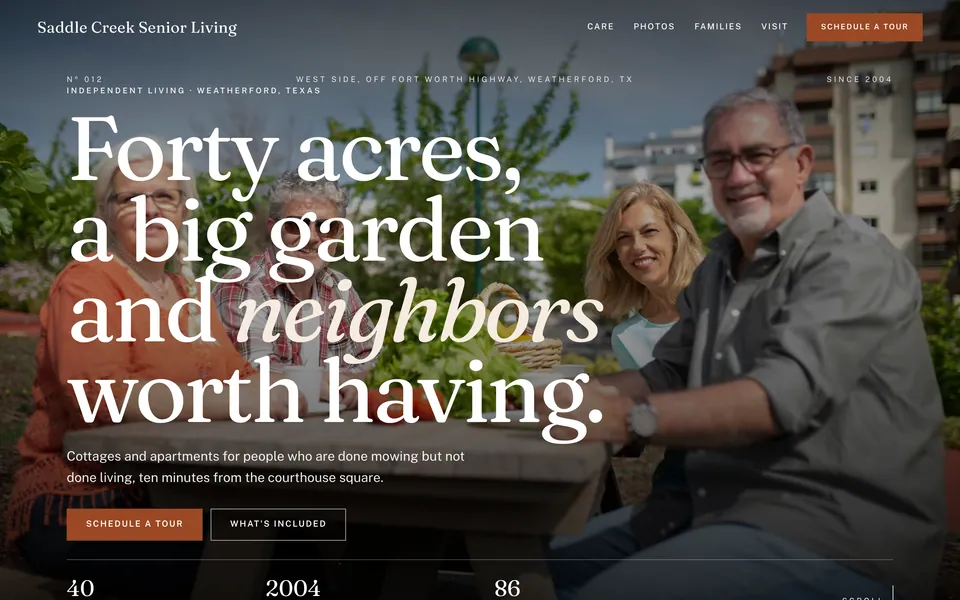
Families search by suburb as much as by city: Arlington, Keller, North Richland Hills, Hurst, Benbrook, Burleson and Weatherford. Build location content around the places you really draw residents and patients from, not every city in the Metroplex.
Hospitals and health systems that refer patients
- JPS Health Network
- Texas Health Fort Worth (Texas Health Resources)
- Baylor Scott & White All Saints Medical Center - Fort Worth
- Medical City Fort Worth
- VA North Texas Health Care
Towns families search from
Arlington, Keller, North Richland Hills, Hurst, Haltom City, Benbrook, Burleson, Grapevine, Weatherford, Saginaw. A good Fort Worth site names the places your residents and their families actually come from.
Texas rules that apply here
Licensing, inspections, payment programs and the ombudsman for Fort Worth are set at the state level. See what a Texas care provider website should show.
Questions
What should a Fort Worth home health or hospice website show?
Your HHSC license category (for example licensed and certified home health, or hospice), the counties and ZIP codes you serve, payers you accept, and a fast way for discharge planners to send a referral.
How many older adults live in Tarrant County?
About 13.9% of Tarrant County's roughly 2.25 million residents were 65 or older on July 1, 2025, about 313,000 people, according to U.S. Census Bureau QuickFacts.
Where can Fort Worth families look up a provider's inspections?
In the Texas HHSC Long-Term Care Provider Search. Linking to it from your website shows families you are open about your record.
Sources
- U.S. Census Bureau QuickFacts: Dallas, Fort Worth, Houston, San Antonio, Austin and Plano cities
- U.S. Census Bureau QuickFacts: Lubbock city and Lubbock, Dallas, Tarrant and Harris counties, Texas
- U.S. Census Bureau ACS 2020-2024 5-year, Table S1601 (Language Spoken at Home): Fort Worth city, Texas
- Texas HHS: Long-Term Care Provider Search
- Texas HHS: Long-Term Care (find a provider)
- Texas HHS: STAR+PLUS
- JPS Health Network
- Texas Health Resources: Texas Health Fort Worth
- Baylor Scott & White All Saints Medical Center - Fort Worth
- Medical City Healthcare: Medical City Fort Worth
- VA North Texas Health Care
- 26 Tex. Admin. Code §558.13 (HCSSA license categories)