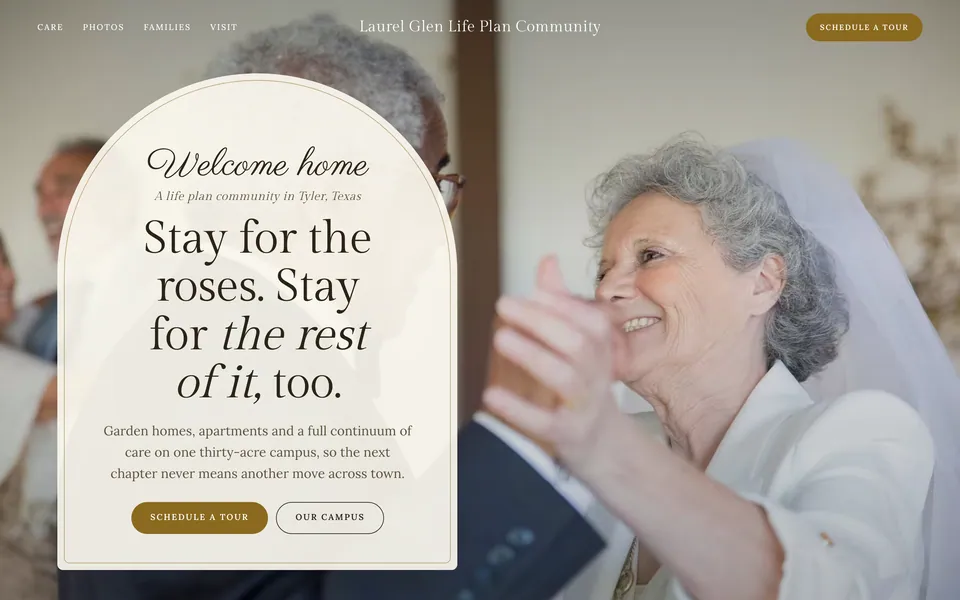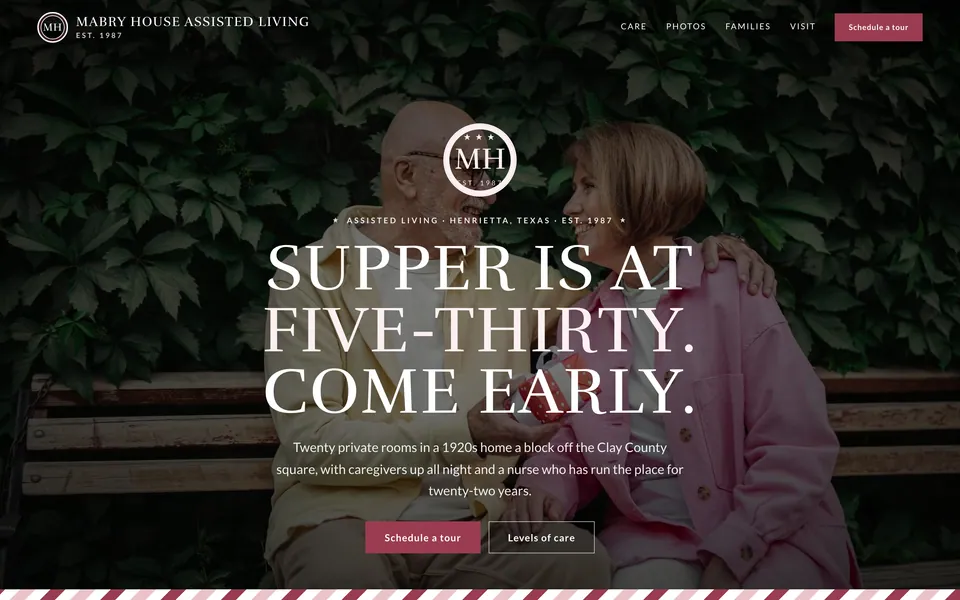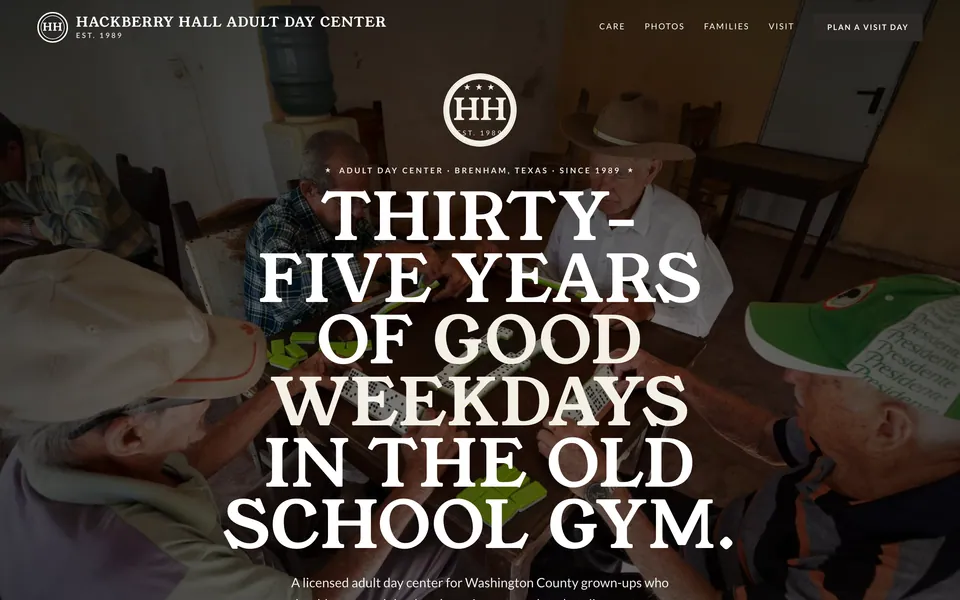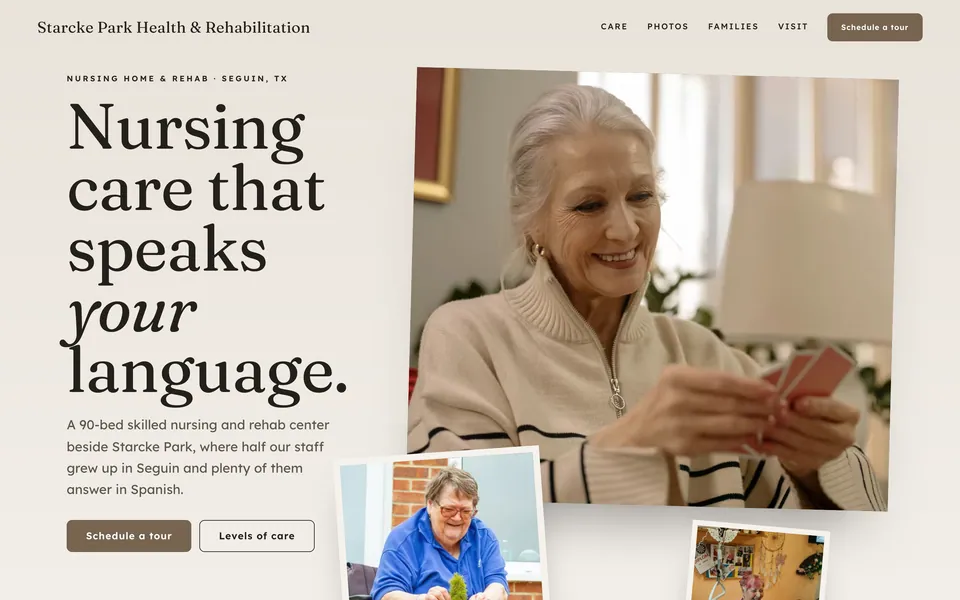
Texas is big enough that "near me" means very different things in Houston and in Lubbock. But the rules behind the website are statewide. One agency, the Texas Health and Human Services Commission (HHSC), licenses and inspects nursing facilities, assisted living facilities, adult day programs and the agencies that provide home health, hospice and personal assistance services. Families, discharge planners and ombudsmen can look up all of those providers in one HHSC search tool, so your website should match what that record says.
That starts with the license. In Texas, an assisted living facility is licensed as Type A or Type B depending on whether residents can leave the building on their own in an emergency and whether they need staff at night. A home and community support services agency (HCSSA) is licensed by category, such as licensed home health, licensed and certified home health, hospice or personal assistance services. Families do not know these terms yet, so say which license you hold and what it means for the person moving in or receiving care.
Money is the other half of the conversation. Older Texans on Medicaid get long-term services through STAR+PLUS, a managed care program run by health plans. If you take STAR+PLUS, say which health plans you contract with. If you do not, say that too. A clear answer on payment saves your admissions team calls that were never going to convert.
Who licenses and inspects care in Texas
- Texas Health and Human Services Commission (HHSC), Long-term Care Regulation
Licenses and certifies nursing facilities (including Medicare and Medicaid certification) and licenses assisted living facilities (Type A and Type B). Surveyors make unannounced visits and investigate complaints. HHSC says standard nursing home surveys happen once a year and assisted living surveys every two years. Official site - HHSC: Home and Community Support Services Agencies (HCSSA)
Licenses agencies that provide home health, hospice and personal assistance services. Under 26 TAC §558.13, categories include licensed home health, licensed and certified home health (Medicare), hospice and personal assistance services, with home dialysis designations available for home health. Official site - HHSC: Day Activity and Health Services (DAHS)
Licenses adult day programs that provide daytime services, usually Monday through Friday, to adults 18 and older, overseen by a licensed nurse. Rules are in 26 TAC Chapter 559. Official site - HHSC: Assisted Living Facilities
Assisted living license types. Type A serves residents who do not need routine attendance during sleeping hours. Type B serves residents who need staff help to leave the facility and need attendance at night. Alzheimer's certification is a separate classification. Official site
Programs that help families pay
- STAR+PLUS (Texas Medicaid managed care)
Medicaid health coverage for adults 65 and older and adults with disabilities, delivered through health plans. It covers medical care plus long-term services and supports such as personal assistance, Day Activity and Health Services and Community First Choice. Adults 21 and older living in a nursing home on Medicaid are among the people who qualify. Every member gets a service coordinator. Learn more - STAR+PLUS Home and Community Based Services (HCBS)
For people who need nursing facility level of care but want to live at home or in the community. Services include personal assistance, nursing, therapies, respite, home-delivered meals, adult foster care and assisted living, plus transition help for people leaving a nursing facility. Assisted living under HCBS must be in a licensed facility that contracts with the member's health plan. Learn more - Area Agencies on Aging and Aging and Disability Resource Centers
Local help for people 60 and older and their caregivers (Area Agencies on Aging, 800-252-9240) and information and referral for older adults and people with disabilities (ADRCs, 855-937-2372). Both are good links for a family resources page. Learn more
Long-term care ombudsman
Texas Long-term Care Ombudsman Program. Free, confidential advocates for people who live in nursing facilities and assisted living facilities, reachable statewide at 800-252-2412.
What a Texas care provider website should show
- Your exact license type in plain words: nursing facility (and whether it is Medicare and/or Medicaid certified), assisted living Type A or Type B, or the HCSSA category your agency holds.
- A link to the HHSC Long-Term Care Provider Search so families can look up your record themselves: https://tulip.hhs.texas.gov/TULIP/s/ltc-provider-search
- The ombudsman program and its number, 800-252-2412. HHSC requires assisted living facilities to post the local ombudsman number and the program's toll-free number, and nursing facilities to post resident advocacy contacts including the ombudsman, so it belongs on your family resources page too.
- Where inspection results can be found. HHSC's required postings list says nursing facilities, assisted living facilities and DAHS programs must post recent inspection or survey results on site, along with HHSC's number for reports, 800-458-9858. A website note that points to the same information shows you are not hiding it.
- If an assisted living community advertises memory care, say whether it holds the Alzheimer's license classification under Texas Health and Safety Code §247.029. Section 247.0295 requires a facility that promotes memory care to give residents written notice of whether it holds that license. Confirm the wording with your compliance officer or counsel.
- Which payers you accept, including Medicare, Medicaid and the specific STAR+PLUS health plans you contract with.
- Spanish-language content where your service area supports it. Statewide, 35.1% of Texans age 5 and older speak a language other than English at home (U.S. Census Bureau QuickFacts, ACS 2020-2024).
How inspections show up in a family's search
HHSC surveyors visit unannounced. They check that a facility meets minimum standards, investigate complaints and confirm past problems were fixed. Within 10 working days of a survey, HHSC sends the facility a list of citations. Penalties can run from $100 to $10,000, and HHSC can suspend admissions or a license. Families can see the results, because facilities must make survey and inspection results available to residents and the public.
For your website, the takeaway is simple. Do not claim a spotless record you cannot back up. If you had a citation and corrected it, a short, factual note on how you handle quality and complaints reads better than silence. Have your administrator and compliance lead sign off on that language.
Who is searching in Texas
Texas had about 31.7 million residents on July 1, 2025, and 14.9% were 65 or older, roughly 4.7 million people (U.S. Census Bureau QuickFacts, Vintage 2025 estimates). About 40.9% of Texans are Hispanic or Latino. In metros like San Antonio and Houston, a Spanish version of your key pages (admissions, payment, visiting, contact) is not a nice extra. It is how a large share of adult children and spouses will read about you.
Medicaid questions also come up early. STAR+PLUS applications start with Medicaid approval, which families can apply for online or by calling 2-1-1. A short paragraph on your payment page that points to 2-1-1 and explains which STAR+PLUS plans you work with will answer a question most families are afraid to ask on the phone.
Questions
Who licenses nursing homes and assisted living in Texas?
The Texas Health and Human Services Commission (HHSC). It licenses and certifies nursing facilities, licenses assisted living facilities as Type A or Type B, and also licenses home health, hospice and personal assistance agencies and adult day (DAHS) programs.
What is the difference between Type A and Type B assisted living in Texas?
HHSC sets the type based on residents' ability to leave the building in an emergency and whether they need staff at night. Type A residents do not need routine attendance during sleeping hours. Type B residents need staff help to evacuate and need attendance at night.
Where can families check a Texas provider's inspection record?
In the HHSC Long-Term Care Provider Search, which covers nursing homes, assisted living, adult day, home health and hospice providers. Facilities must also make their survey and inspection results available on site.
Does Texas Medicaid pay for assisted living?
It can, through the STAR+PLUS Home and Community Based Services program, for people who need nursing facility level of care. The assisted living facility must be licensed and under contract with the member's STAR+PLUS health plan.
Should a Texas memory care website mention Alzheimer's certification?
Texas law sets up a separate license classification for assisted living facilities that promote Alzheimer's care, and a facility that advertises memory care must tell residents in writing whether it holds that license. Being clear about it on the website is the honest choice. Confirm the details with your compliance officer or counsel.
Sources
- Texas HHS: Long-term Care Providers
- Texas HHS: Long-Term Care Facility Regulation fact sheet
- Texas HHS: Nursing Facilities
- Texas HHS: Assisted Living Facilities
- Texas HHS: Home and Community Support Services Agencies
- 26 Tex. Admin. Code §558.13 (HCSSA license categories)
- Texas HHS: Day Activity and Health Services
- Texas HHS: Required Postings for long-term care providers
- Texas HHS: Long-Term Care (find a provider)
- Texas HHS: Long-Term Care Provider Search
- Texas Long-term Care Ombudsman Program
- Texas HHS: STAR+PLUS
- Texas HHS STAR+PLUS Handbook: 7200, Assisted Living Services
- Texas HHS: Aging services (AAA and ADRC)
- Texas Health and Safety Code Chapter 247 (§247.029, §247.0295)
- U.S. Census Bureau QuickFacts: Texas
General information, not legal advice. Rules change: confirm details with the agency or your counsel.